Your Childhood Dream Called — You Probably Shouldn't Pick Up
Your Childhood Dream Called — You Probably Shouldn't Pick Up
Somewhere between your third-grade art project and your current LinkedIn profile, someone told you that the secret to a fulfilling life was buried in your past. Return to what made you light up as a kid, they said. Reconnect with that wide-eyed version of yourself. The dream is still in there.
It's a beautiful idea. It's also, in a lot of cases, a trap.
That's not a comfortable thing to say out loud, especially in a culture that romanticizes childhood wonder the way Americans do. We've built an entire self-help industry around the notion that our most authentic selves are frozen somewhere in the past, waiting to be rescued. But what if chasing that frozen version of you is actually the thing keeping you from becoming who you're supposed to be now?
The Warm Glow That Distorts Everything
Nostalgia is neurologically potent. When you remember wanting to be a ballerina at age seven, or a astronaut, or a comic book artist, your brain doesn't serve up a neutral memory — it serves up a highlight reel soaked in warmth and safety. Researchers call this rosy retrospection, the tendency to remember the past as better than it actually was.
The problem is that this emotional glow doesn't just make the past feel good. It makes the present feel inadequate by comparison. You're not just remembering a childhood dream — you're measuring your current life against an idealized, emotionally amplified version of it. And your current life, with all its complexity and compromise, rarely wins that contest.
This is where nostalgia stops being a comfort and starts being a cage.
'But That's Who I Really Am'
One of the stickiest beliefs in personal development culture is the idea of an authentic self — some core, unchanging version of you that exists beneath all the conditioning and compromise. And childhood, the thinking goes, is where that self lived most freely.
But developmental psychologists will tell you something different: identity isn't a fixed thing you uncover. It's something you construct, continuously, across your whole life. The kid who wanted to be a marine biologist because she thought dolphins were cool at age eight wasn't expressing her deepest truth. She was a child responding to the information and experiences available to her at the time.
You've had a few more experiences since then. You've changed. That's not a betrayal of yourself — that's called growing up.
Clinging to a childhood dream as though it represents your most legitimate self can actually be a way of avoiding the harder, more vulnerable work of figuring out what you want now, as the complicated adult you've become.
When Nostalgia Becomes a Productivity Myth
There's a specific flavor of nostalgic dreaming that's particularly common in the US right now, and it tends to show up in career conversations. It sounds like: I used to love drawing before school killed it. I need to get back to that. Or: I was obsessed with cooking as a kid before life got in the way. That's my real passion.
Sometimes, these instincts are genuine and worth following. But sometimes — and this is the part nobody talks about — they're a form of magical thinking. The belief that returning to a childhood interest will somehow bypass all the difficulty of building a skill, a career, or a creative practice in adulthood.
Childhood passions felt effortless partly because children aren't accountable for results. A seven-year-old who loves drawing doesn't have to worry about clients, deadlines, creative blocks, or paying rent with their art. When adults try to return to those passions expecting the same uncomplicated joy, they often hit a wall — and then wonder what's wrong with them.
Nothing is wrong with them. They just forgot that the dream they're chasing was always a little bit fictional.
The Difference Between Inspiration and Instruction
Here's the reframe that actually works: your childhood dreams aren't a destination. They're data.
If you loved making up stories as a kid, that's useful information — not because you're destined to become a novelist, but because it tells you something about the kind of engagement that lights you up. Maybe that translates into writing. Maybe it translates into UX design, or teaching, or building brands. The specific childhood dream is less important than what it was pointing toward.
Successful people who seem to have "followed their childhood dreams" often haven't, not literally. What they've done is stayed in conversation with the underlying impulses — curiosity, creativity, connection, mastery — and found contemporary expressions of those impulses that actually fit who they are today.
That's a very different thing from trying to resurrect a nine-year-old's vision of the future.
Letting the Old Dream Go (Without Losing Yourself)
Releasing a childhood dream doesn't mean abandoning your sense of self. It means trusting that the self you are right now — with all your accumulated experience, your changed preferences, your hard-won perspective — is worth dreaming from, not just dreaming about.
Some questions worth sitting with:
- What did that childhood dream make you feel? Not what it was, but what it promised. Freedom? Recognition? Creative flow? That feeling is the real thread worth following.
- Is this dream actually mine, or did someone hand it to me? A lot of childhood dreams are absorbed from parents, teachers, or cultural moments. The kid who wanted to be a doctor might have been chasing approval more than medicine.
- What's the present-tense version of this? If you strip away the specific childhood fantasy, what does a life that honors those same values actually look like for you now?
Dream Forward, Not Backward
There's something quietly radical about deciding that your best dreaming is still ahead of you — not locked in a memory, not waiting to be excavated from your past, but genuinely yet to be imagined.
American culture loves a comeback story, and there's real power in that narrative. But there's a different kind of story that doesn't get told as often: the one where someone stops trying to return to something and starts building something entirely new instead. Where the dream isn't a reunion with the past but a genuine act of imagination aimed at the future.
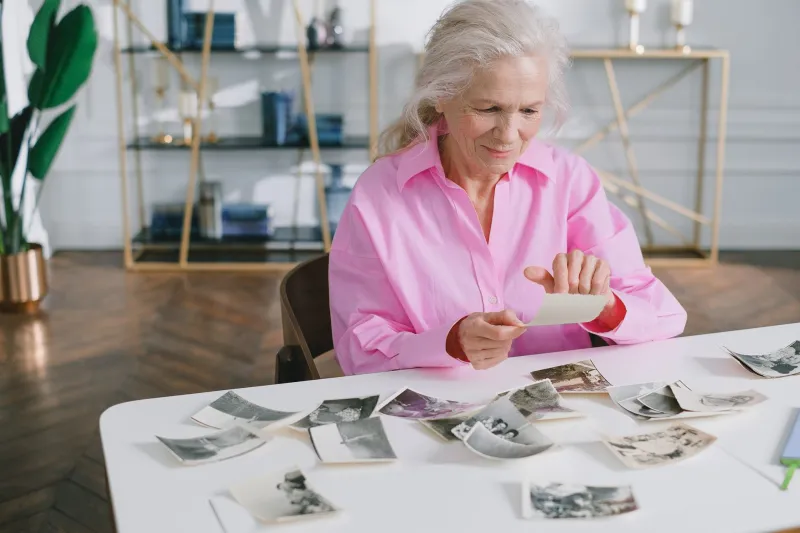
That's the kind of dreaming worth getting excited about. Not the warm, sepia-toned kind that keeps you scrolling through old photos at midnight — but the wide-open, slightly terrifying kind that only becomes possible once you stop looking backward long enough to see what's actually in front of you.
The best dream you'll ever have probably isn't one you've already had. It's one you haven't let yourself think of yet.