Cottagecore Herbalist by Day, Corporate Drone by Night: Inside America's Fantasy Life Obsession
Cottagecore Herbalist by Day, Corporate Drone by Night: Inside America's Fantasy Life Obsession
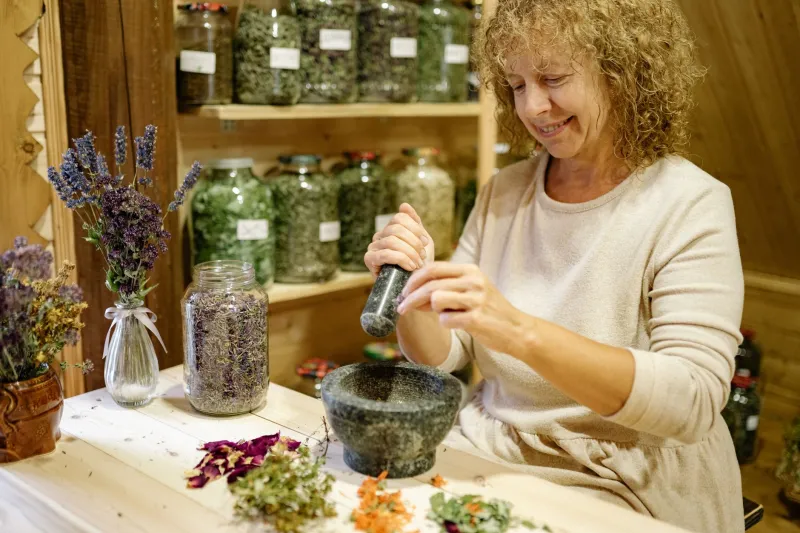
Scroll TikTok for more than ten minutes and you'll find her. She's arranging dried lavender on a worn wooden table, a linen apron tied loosely around her waist, soft rain tapping against a cottage window somewhere that definitely isn't a studio apartment in Columbus, Ohio. She calls herself an herbalist. She has 200,000 followers. And in real life, she works in accounts payable.
Welcome to the Fantasy Life trend — one of the most quietly radical things happening on social media right now.
So What Exactly Is a 'Fantasy Life' Persona?
The concept is deceptively simple. People build out an alternate identity online — sometimes through videos, sometimes through carefully curated photo sets or journaling threads — that depicts a life they're not actually living. The aesthetics vary wildly: there's the Parisian expat sipping espresso at a zinc-topped café bar, the vintage bookshop owner with ink-stained fingers, the slow-living homesteader who rises with the sun and bakes sourdough from a century-old starter.
What ties them together isn't the aesthetic, though. It's the intentionality. These aren't random mood boards. They're fully realized alternate selves, complete with backstories, daily routines, and a specific emotional vibe — usually one that prioritizes slowness, beauty, autonomy, and meaning.
Hashtags like #fantasylife, #softlife, #quietliving, and #coreidentity have collectively racked up billions of views. And the people creating this content aren't just teenagers. A significant chunk are adults in their 20s, 30s, and 40s — people with mortgages, demanding jobs, and kids — who carve out an hour a week to inhabit someone else's slower, prettier existence.
Why Now? The Cultural Moment Behind the Trend
It would be easy to chalk this up to pandemic-era escapism that never quite ended. And honestly, that's part of it. After a few years of collective upheaval, the appeal of a simpler, more intentional life makes total sense. But psychologists who study identity and digital behavior say something deeper is going on.
"What we're seeing is a form of identity exploration that's been supercharged by social media's visual format," says one behavioral researcher who studies online self-presentation. "Humans have always fantasized about alternate lives — that's not new. What's new is the ability to externalize that fantasy, share it, and get social reinforcement for it."
There's also a very real reaction happening against hustle culture. For a generation told that optimizing every hour and chasing career milestones was the path to fulfillment, the fantasy of a life built around beauty and presence — rather than productivity and performance — is almost radical.
The cottagecore herbalist isn't just cute. She's a protest.
What Your Fantasy Self Is Actually Telling You
Here's where it gets interesting. Psychologists suggest that the specific fantasy life someone gravitates toward isn't random. It tends to reflect genuine unmet needs — values or desires that aren't being honored in their current circumstances.
Do you keep returning to imagery of a quiet home library, afternoon light, and no notifications? You might be craving solitude and intellectual space that your current life doesn't provide. Obsessed with the idea of running a small flower farm in Vermont? That could be a signal about a desire for tangible, hands-on work — something you can see and touch — in contrast to abstract, screen-based labor.
"Fantasy lives are essentially wish maps," explains one therapist who works with clients on values clarification. "They tell you what matters to you when you strip away all the practical constraints. That information is genuinely useful."
The danger, she notes, is when the fantasy becomes a substitute for action rather than a catalyst for it. Spending hours curating a Parisian expat aesthetic while never actually learning French, saving money, or researching a move abroad can tip from healthy dreaming into a kind of emotional sedative — soothing the dissatisfaction without addressing it.
The Line Between Dreaming and Hiding
Not everyone in the Fantasy Life space is avoiding reality, though. Plenty of creators are quite open about the gap between their content and their daily lives — and their audiences love them for it. There's something almost communal about watching someone else articulate a shared longing.
"I think people watch my videos because they feel seen," says one popular creator who posts under a slow-living aesthetic despite working full-time in healthcare. "I'm not pretending to actually live this way 24/7. I'm saying: this is what I'm reaching for. This is what matters to me."
That transparency is actually what mental health professionals point to as the healthiest version of the trend. When a fantasy life functions as a values statement — a public declaration of what you're moving toward — it can be genuinely motivating. Research on mental simulation supports this: vividly imagining a desired future can increase the likelihood that you'll take steps to pursue it, as long as you also stay grounded in the practical realities of getting there.
How to Use Your Fantasy Self as a Creative Roadmap
So how do you take the Fantasy Life trend from passive scrolling to something that actually shifts your real life? A few approaches worth trying:
Start with the feeling, not the aesthetic. Instead of pinning images of a French countryside kitchen, ask yourself: what does that image make me feel? Calm? Free? Unhurried? That feeling is the actual goal — and there are probably multiple paths to it that don't require relocating to Provence.
Extract the values. If your fantasy persona is a vintage bookshop owner, what specifically appeals? The curation? The community? The physical space? The independence? Each of those is a real value you can start honoring in smaller ways right now.
Make it a creative practice, not a consumption habit. There's a difference between endlessly watching other people's fantasy life content and actively building your own. Journaling your fantasy persona, creating a mood board, or even writing a short story from their perspective can shift you from passive consumer to active dreamer — which is a much more generative headspace.
Look for the overlap. Where does your fantasy life actually intersect with your real life? Maybe you can't quit your job and open a flower farm, but you can join a local gardening club, take a weekend workshop, or start growing herbs on your windowsill. Small intersections compound.
Dreaming Out Loud
There's something quietly courageous about posting your fantasy life for strangers to see. It's an admission that the life you have and the life you want aren't the same thing — and that you haven't given up on the distance between them.
At Droomit, we think that gap is worth paying attention to. Not to feel bad about it, but to get curious. Your fantasy persona — whether she's an herbalist, a bookshop owner, or a ceramicist with a studio overlooking the sea — isn't a delusion. She's a clue.
Maybe the most interesting question isn't why millions of Americans are roleplaying alternate lives online. Maybe it's: what would happen if they started taking their own fantasies a little more seriously?