The Secret Career You're Living in Your Head (And Why You Should Take It Seriously)
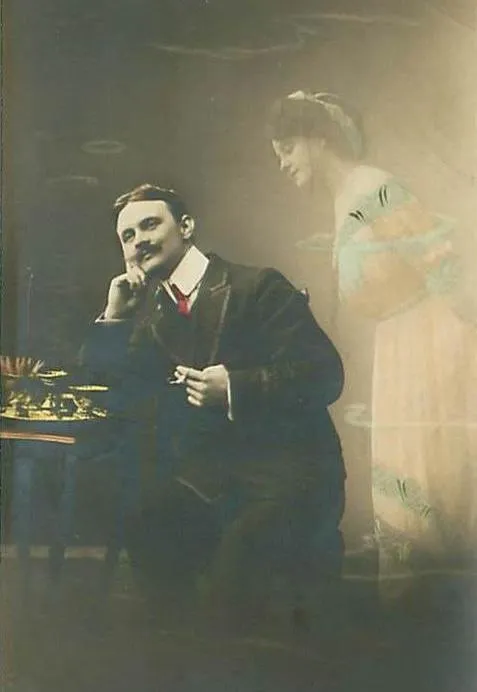
Photo: Unknown authorUnknown author, Public domain, via Wikimedia Commons
Somewhere between your last performance review and your third cup of coffee, you've probably done it. You've mentally drafted the bio. The one where you're not a mid-level project manager in Cincinnati — you're a documentary filmmaker, or a ceramics studio owner, or a marine biologist who spends half the year on a research vessel. You've imagined the LinkedIn headline. Maybe you've even written it down.
You're not alone. And honestly? You might be onto something.
The Phantom Portfolio Is Very Real
Career coach Dana Whitmore, who works with clients across the country through her Chicago-based practice, says she started noticing the pattern about five years ago. "I'd ask clients to describe their ideal professional life, and they'd immediately get sheepish," she says. "Like they were embarrassed to admit they had a whole alternate version of themselves fully fleshed out. Some of them had actual documents — side portfolios, fake bios, even mock project lists."
This isn't a fringe thing. A 2023 survey by the American Psychological Association found that nearly 60% of employed Americans reported feeling disconnected from their professional identity at some point in the past year. For a lot of people, the fantasy resume is how that disconnection gets processed — quietly, privately, usually in a browser tab they'd close fast if someone walked by.
Call it the phantom career. The parallel professional self. The version of you that got to say yes to the thing you said no to at 24.
Why We Build Them
Psychologists have a name for this kind of mental construction: possible selves theory. Developed by researchers Hazel Markus and Paula Nurius in the 1980s, the idea is that we all carry around multiple versions of who we could be — hoped-for selves, feared selves, and the ones that got away. The fantasy resume is basically a hoped-for self with a professional headshot.
"It's a form of psychological self-protection," explains Dr. Marcus Ellery, an organizational psychologist based in Austin. "When someone feels trapped in a career that doesn't reflect who they are, the fantasy version allows them to maintain a sense of identity continuity. You're essentially telling yourself: this isn't all I am. There's more here."
For some people, that's deeply motivating. For others, it can become a way of staying stuck — a pressure valve that releases just enough frustration to prevent any real action.
The Guy Who Actually Made His Phantom Career Real
Take Marcus, 38, a software engineer from Portland who spent years nursing what he calls his "ghost resume" — a fictional version of himself as a music producer. He kept a private Notion doc with fake album credits, artist collaborations he'd never had, and a bio written in third person. "It sounds ridiculous when I say it out loud," he laughs. "But it kept something alive in me."
Three years ago, he started taking production seriously on weekends. Last year, he released his first EP under a pseudonym. It didn't go viral. He didn't quit his day job. But the ghost resume and the real one are starting to look a lot more similar. "I don't think I would have started if I hadn't been maintaining that fantasy for so long. It was like a rehearsal."
Not every story ends with a pivot, though. Jess, 44, a Philadelphia-based HR director, has kept a fantasy version of herself as a travel writer for over a decade. She's made peace with the fact that it might stay a fantasy. "It's not sad to me," she says. "It reminds me of what I value. That's useful even if I never actually do it."
When the Fantasy Starts Hurting
Here's where it gets complicated. Career counselors are split on whether the phantom career is healthy or corrosive, and the answer seems to depend almost entirely on how you're using it.
"If it's a compass, great," says Whitmore. "If it's a hiding place, that's a problem." She's worked with clients who spent so much emotional energy on their fantasy professional self that they stopped investing in their actual career — turning down growth opportunities, phoning in performance reviews, quietly checking out. "The fantasy became more real to them than reality. And that's when it stops being a dream and starts being avoidance."
The line between inspiration and escape is thinner than it looks. Ellery recommends what he calls a "reality audit" — periodically asking yourself whether your fantasy resume is pulling you forward or just making the present more tolerable. Are there any elements of it you could realistically incorporate into your actual life, even in small ways? A side project, a class, a conversation with someone doing the thing you wish you were doing?
How to Actually Use Your Phantom Career
If you've got a secret professional identity living rent-free in your brain, here's how to make it work for you instead of against you.
Get specific about what it represents. Is your fantasy career about creativity? Autonomy? Prestige? Adventure? Often the specific job in your head is just a vehicle for a deeper value. Figure out what that value is — it's easier to find ways to honor it in your real life once you name it.
Treat it like a prototype, not a destination. The documentary filmmaker version of you doesn't have to replace the project manager version. But could you start a YouTube channel? Volunteer with a local film festival? Prototype the identity before you blow up the one you have.
Schedule a review. Revisit your phantom career every six months. Is it still the same? Has it evolved? What does that tell you about how your actual life is or isn't changing?
Tell someone. The embarrassment we feel about our fantasy selves is often what keeps them stuck in our heads and out of our lives. Saying it out loud to a trusted friend or a career coach has a funny way of making it feel less impossible.
Dream It First, Then Figure Out the Rest
At Droomit, we believe that the things you imagine for yourself — even the half-baked, slightly embarrassing ones — are worth taking seriously. Your phantom career isn't a delusion. It's data. It's your subconscious trying to tell you something about who you actually are underneath the job title.
Maybe the fantasy resume stays a fantasy. Maybe it becomes a side hustle. Maybe it slowly, quietly becomes the real thing. But the first step is giving yourself permission to stop being embarrassed about having it in the first place.
You dreamed it. That's not nothing. That's actually a pretty great place to start.

