Beyond the Vision Board: 7 Next-Level Ways Americans Are Designing Their Dream Lives Right Now
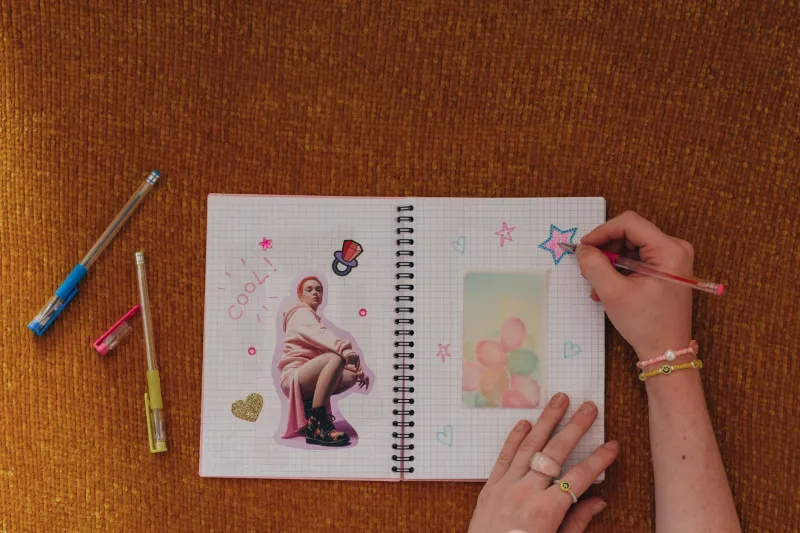
Let's be honest. The vision board had a good run. The magazines, the scissors, the carefully arranged photos of Tuscan villas and toned abs pinned to a corkboard — it was tactile, it was optimistic, and for a certain era of self-help culture, it felt genuinely exciting.
But something has shifted. Maybe it's that we've grown more specific about what we want. Maybe it's that we've developed a healthy skepticism toward passive wishing. Or maybe it's just that cutting up old issues of Architectural Digest doesn't quite hit the same when you're trying to redesign your entire life from the inside out.
Whatever the reason, a new wave of Americans are ditching the corkboard for something wilder, more immersive, and frankly more interesting. Here are seven of the most creative ways people are manifesting their dream lives right now — and why each one might actually work.
1. AI-Generated Future Self Portraits
This one sounds like science fiction, and honestly, it kind of is — in the best way. Using tools like Midjourney, DALL·E, or dedicated apps like Lensa, people are generating hyper-detailed visual portraits of who they want to become. Not a stock photo of "success." Their face. Their energy. Their imagined life, rendered in stunning visual detail.
The psychological principle at play here is called "self-concept clarity," and researchers have found that having a vivid, specific image of your future self makes you more likely to make choices that align with that version of you. When your future self has an actual face — your face — the emotional pull is surprisingly strong. People are printing these images, setting them as phone wallpapers, and using them as daily anchors for the life they're building.
2. Dream Journaling Rituals (With a Twist)
Dream journaling as a manifestation tool isn't new, but the way Americans are approaching it has gotten a lot more intentional. Instead of just scribbling down what happened while you slept, practitioners are combining nighttime dream capture with morning scripting — a technique where you write your desired life in the present tense, as if it's already happening.
Think: "I wake up in my light-filled apartment in Denver. My creative work is paying my bills. I feel genuinely rested." The ritual creates a kind of narrative bridge between your subconscious imagery and your conscious intentions. Some people even use specific prompts — "What did my future self do today?" — to make the exercise feel less like wishful thinking and more like active design.
Bonus: it doubles as a mindfulness practice, which means even the skeptics get something out of it.
3. Immersive "Life Rehearsal" Pop-Up Experiences
This might be the most delightfully strange entry on the list. Across cities like Los Angeles, New York, and Austin, a new category of experience-based events has emerged — part theater, part therapy, part manifestation workshop. Participants are guided through immersive scenarios designed to feel like their desired future life.
Some are facilitated by coaches or experience designers. Others borrow from improvisational theater techniques. The idea is that your nervous system doesn't fully distinguish between a vividly experienced simulation and reality — so rehearsing the feeling of your dream life, in a physical space, with other people, can rewire your expectations and your sense of what's possible for you.
It sounds a little out there. People who've done it tend to describe it as one of the most unexpectedly moving experiences of their lives.
4. Micro-Manifestation Through "Proof Lists"
Here's a grounded, practical alternative for the manifestation-curious skeptic. Instead of focusing on the big, distant goal, proof list practitioners spend five minutes each morning listing small, concrete evidence that their desired life is already beginning to materialize.
Got a compliment on your creative work this week? That goes on the list. Found an apartment listing in the neighborhood you've been dreaming about, even if you can't afford it yet? List it. Had an unexpected conversation that felt like a door cracking open? Write it down.
The cumulative effect, practitioners say, is a shifted baseline — your brain starts scanning for possibility instead of obstacle. It's less about magical thinking and more about training your attention, which is something neuroscience has plenty to say about.
5. Sensory Mood Boards (That You Can Actually Touch, Hear, and Smell)
The classic vision board is a visual medium, which only covers one of your five senses. The sensory mood board goes further. People are curating physical collections of objects, textures, sounds, and scents that evoke their dream life — and spending a few intentional minutes each day engaging with them.
A playlist of sounds from the city where you want to live. A fabric swatch that feels like the home you're building toward. A candle scented like the ocean you want to wake up next to. It sounds indulgent, and it is — but engaging multiple senses creates a richer, more emotionally resonant experience than any flat image on a board.
Interior designers and creative directors have been doing versions of this for years. The wellness world is just catching up.
6. Community Manifestation Circles
Manifestation is getting social. Inspired partly by the tradition of women's circles and partly by the accountability culture of modern fitness communities, manifestation circles are popping up in living rooms, coffee shops, and Zoom calls across the country.
These are small groups — usually six to twelve people — who gather regularly to share their intentions, celebrate progress, and hold each other accountable to the lives they're building. The social element matters more than it might seem. Research on goal achievement consistently finds that sharing your intentions with a supportive community dramatically increases follow-through. When your dreams have witnesses, they get a little more real.
Some circles are organized around specific themes — creative careers, relocation goals, relationship intentions. Others are more open-ended, functioning almost like a book club for your inner life.
7. "Living the Feeling" Micro-Experiences
This last one is both the simplest and the most sneakily powerful. The premise: instead of waiting until you have the life you want to feel the way you want to feel, you engineer small, deliberate doses of that feeling right now.
Dreaming of a life with more adventure? Book a weekend trip somewhere you've never been — doesn't have to be far or expensive. Craving a creative career? Spend one Saturday morning making something purely for the joy of it. Want to feel more financially abundant? Spend an afternoon window-shopping in the neighborhood you want to live in someday, letting yourself fully imagine the life.
The goal isn't to fake it until you make it in a hollow way. It's to give your nervous system real, embodied reference points for the life you're moving toward. When you've actually felt the thing you want, even in miniature, it stops being abstract. And things that stop being abstract have a funny way of getting closer.
Vision boards aren't going anywhere — and honestly, if yours is still working for you, keep it. But if you've been staring at the same magazine clippings for three years and feeling vaguely uninspired, maybe it's time to dream a little differently. The tools are stranger, more personal, and more alive than ever. All you have to do is pick one and start.