Before Coffee, Before Email: The Case for Writing Down Last Night's Weirdness

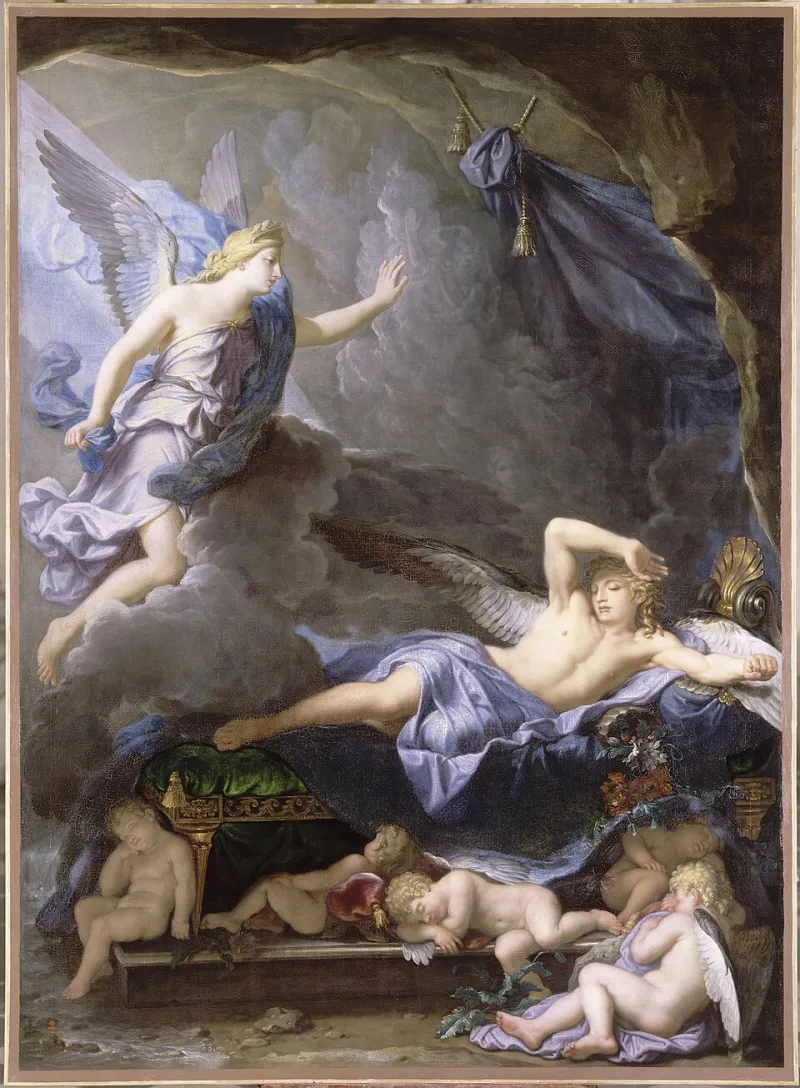
Photo: dream journal notebook on bedside table morning light coffee, via img.freepik.com
At 6:42 a.m., somewhere between the first alarm and the second, a lot of Americans are doing something they would not have admitted to five years ago: scribbling down the nonsense their brains produced overnight. Not to decode it. Not to find a hidden message about their ex. Just to catch it before it evaporates.
That ritual — the dream journal — has quietly moved from mystical niche to mainstream morning habit. You can find guided notebooks next to the vitamin C at big-box stores, voice-memo folders labeled dreams on phones, and AI-assisted apps that promise to transcribe, tag, and summarize whatever your sleeping mind cooked up. The pitch is always the same: better recall, fresher ideas, a little more insight into the person you are when you are not performing being awake.
Droomit's take? The notebook is not magic. But it is a surprisingly useful creative tool — if you use it like one.
A dream journal is not a diary
A diary records what happened. A dream journal records what almost happened, what made no sense, and what felt important for reasons you cannot explain. That difference matters. Diaries invite judgment — was today good or bad? Dream journals invite fragments. A color. A hallway. A feeling of being late. A dog wearing a suit. The bar is low, which is exactly why people keep doing it.
Most journaling advice fails because it asks too much. Dream journaling works because it asks almost nothing. Three words are enough. A doodle is enough. A voice memo you will never listen to again is enough.
The science is less mystical than it sounds
Sleep and creativity researchers have long been interested in the loose, associative quality of dreams. Your brain is not following a to-do list at 3 a.m. It is mixing memory, emotion, and random sensory input into something new. That is not a prophecy. It is more like compost.
The practical effect is recall. Dreams fade fast, especially if you immediately check email, scroll, or start negotiating with a toddler about breakfast. Writing something down in the first few minutes after waking interrupts that forgetting curve. Even a messy fragment can anchor the rest of the dream.
There is also the incubation effect. When you give your mind a low-stakes place to put strange material, you are more likely to notice connections later. That is why writers, designers, and musicians often keep some version of a dream log. They are not looking for answers. They are looking for ingredients.
Paper, voice memo, or app?
Paper is tactile and slow in a good way. It also does not notify you about a sale. A voice memo is faster if you wake up mid-thought and cannot find a pen. AI-assisted apps can be useful for transcription and search, but they add a layer of interpretation that can get in the way. The point is to capture your own weirdness, not outsource the noticing.
A simple rule: choose the method with the least friction between waking and writing. If you hate the notebook, you will not use the notebook. If the app makes you feel like you are filing a report, skip it.
What creative people actually do with the material
The artists and writers who stick with dream journals tend not to treat them as dream dictionaries. They treat them as sketchbooks. One image becomes a color palette. One emotion becomes a character's motivation. One nonsensical transition becomes a plot twist. The dream does not have to mean anything to be useful.
That is the quiet shift happening right now. Dream journaling is becoming less about interpretation and more about input. It sits alongside morning pages, voice notes, and the notes app as a place to collect raw material before the day gets loud.
Five prompts to try before your feet hit the floor
- What is the first image you can still see?
- What was the dominant emotion, even if the plot made no sense?
- What was the strangest detail you would never invent on purpose?
- Finish this sentence: In the dream, I was trying to...
- If this dream were a title, what would it be?
You do not need to answer all five. One is enough. The goal is not a perfect record. The goal is to catch the thing before it disappears.
The point is not to become a dream expert
The dream journal trend will probably get weirder before it gets calmer. There will be more apps, more prompts, more expensive notebooks with better paper. That is fine. But the core practice is almost embarrassingly simple: wake up, write down the strange thing, go make coffee.
Droomit is not here to tell you that every dream is a message. We are here to tell you that last night's chaos is allowed to be today's idea. Dream it. Explore it. Live it. Sometimes that starts with three messy lines in a notebook you keep by the bed.